Plug-in Solar Fire Risk: What Actually Matters
“Can it start a fire?” is one of the first questions people ask about plugging a solar kit into a wall outlet, and it is a fair one. Any device that pushes current through home wiring carries some fire risk, and plug-in solar adds a twist: it feeds power into a circuit from the outlet end, where the breaker cannot see it. The risk is manageable, but it is not zero, and it depends far more on the circuit, the product and the setup than on the panels themselves. This guide explains where the fire risk actually comes from, what safety experts and standards focus on, the warning signs to watch for, and a short list of habits that cut the risk. It is based on UL Solutions’ safety commentary, CPSC recall notices and state law text. We have not tested any kit.
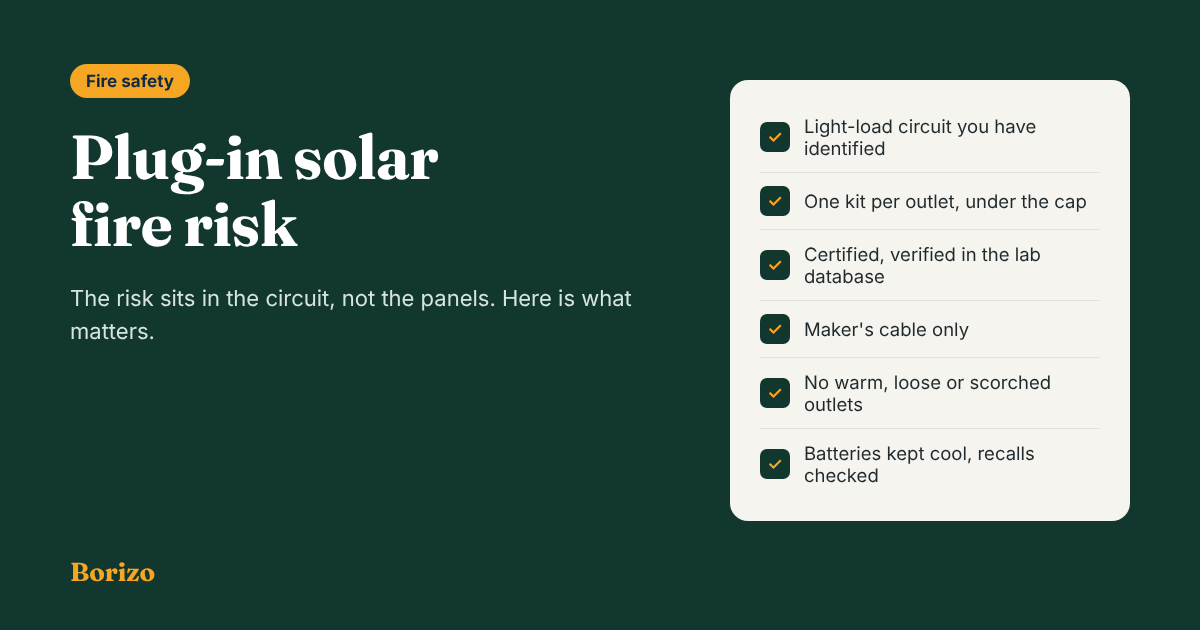
The main fire risk with plug-in solar is overloading the wire between the kit and a large appliance on the same circuit, because the breaker only measures power from the panel. Choose a certified kit, plug it into a light-load circuit you have identified, use only the maker’s cable, keep any battery away from heat, and stop using an outlet or cable that is warm, discolored or loose.
- The circuit is the main risk. UL Solutions says the combined current from the utility and a plug-in source “can exceed conductor ratings without tripping the circuit breaker.”
- Protective devices may not behave as designed. UL warns that two-way current can end up “potentially blinding GFCIs.”
- Uncertified products are a bigger gamble. UL 3700 was written for this product type, and several states require it or an equivalent listing.
- Batteries add their own risk. The CPSC has recalled or warned about portable power stations after fires, including one death.
- Warning signs are simple: heat, a burning smell, discoloration, buzzing, or a plug that fits loosely. Unplug safely and get the outlet checked.
Where the fire risk comes from
Panels themselves are glass, aluminum and silicon, and they rarely start fires on their own. The risk sits in the electrical path: the microinverter, the cable and plug, the outlet, and the branch circuit in your walls. Here are the four places safety experts point to.
1. Overloading the branch circuit
Home circuits are designed for power flowing one way: from the panel’s breaker, along the wire, to the things you plug in. The breaker protects the wire by tripping if too much current flows from the panel. A plug-in kit adds current at an outlet partway along the circuit. UL Solutions, which wrote the UL 3700 standard, explains the problem in its column for electrical inspectors: “the combined current from the utility and PIPV source can exceed conductor ratings without tripping the circuit breaker,” which poses fire and shock risks.
In practice, that overload happens on the stretch of wire between the kit and a heavy appliance on the same circuit, such as a space heater or a window air conditioner, when both are running. This is why state laws cap output (most at 1,200 W) and why choosing the circuit matters more than choosing the outlet. Our wattage limit guide walks through the arithmetic, and which outlet to use shows how to check a circuit.
2. Protective devices that assume one-way current
GFCI outlets and breakers protect against shock by detecting current leaking where it should not. UL Solutions notes that current GFCI standards assume one-way flow and that a plug-in kit’s two-way flow can end up “potentially blinding GFCIs and leaving circuits unprotected.” That is mainly a shock concern, but it also means a protective layer you might count on may not work as intended. Follow your kit’s manual on GFCI outlets and ask an electrician.
3. Plugs, cables and connections
Loose or damaged connections create resistance, and resistance creates heat. A worn outlet that grips a plug loosely, a cable pinched in a door or crushed under furniture, or a connector left lying in water are all ways a small fault can grow. Extension cords and power strips add more connections and are not covered by the official sources we read, so use only the cable the maker supplies. Our safety and backfeeding guide also explains why a kit’s plug blades can be energized in sunlight.
4. Batteries
Lithium-ion batteries store a lot of energy in a small space, and a damaged or defective cell can overheat and burn. The CPSC announced a recall of about 5,740 HALO 1000 portable power stations in August 2024 after four fire reports and one death from smoke inhalation, and in September 2025 warned consumers to stop using Aeiusny 400 W and 500 W power stations sold on Amazon after 24 reports of fires and explosions. If your setup includes a battery, see plug-in solar vs a power station for the safety checks.
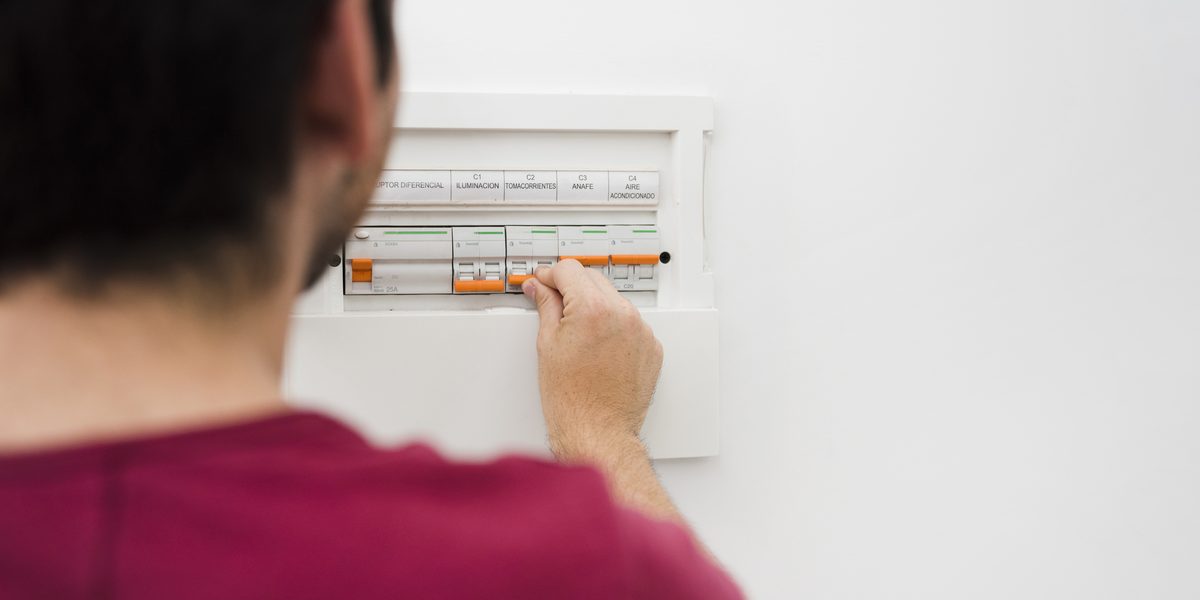
Stock photo (Freepik) for illustration only. It is not a Borizo installation, and we have not tested any product shown.
Risk factors at a glance
| Factor | Higher risk | Lower risk |
|---|---|---|
| Circuit | Shared with a space heater, AC unit or microwave; unknown breaker | Identified circuit with light loads, or a dedicated one |
| Kit size | Above your state’s cap, or two kits on one circuit | Within the cap, one kit per outlet |
| Certification | No listing, or a logo you cannot verify | Listing confirmed in a recognized lab’s database |
| Cable and plug | Extension cords, power strips, damaged cable | Maker’s cable, undamaged, routed safely |
| Outlet | Loose, cracked, discolored or warm | Grounded outlet in good condition |
| Battery | Recalled model, kept in sun or near heat | Listed product, checked against recalls, kept cool |
What the standards and laws do about it
UL 3700 is the safety standard written for plug-in solar. UL Solutions says it “defines safety requirements for this emerging technology,” and the inspectors’ column lists mitigations such as limiting output and using “proprietary plug configurations to avoid unsafe installations.” State laws approach the risk in three ways:
- Output caps. Most enacted laws cap a plug-in device at 1,200 W, which keeps the added current within a share of a typical circuit. Colorado allows 1,920 W, and Maine requires a licensed electrician and a dedicated circuit above 420 W.
- Certification. Vermont and Maine name UL 3700 or an equivalent, and other states require a listing from a nationally recognized testing laboratory. See our certification guide for how to check a claim.
- One device per outlet. Colorado’s law says so directly, which prevents stacking kits on one circuit.
Warning signs: what to do
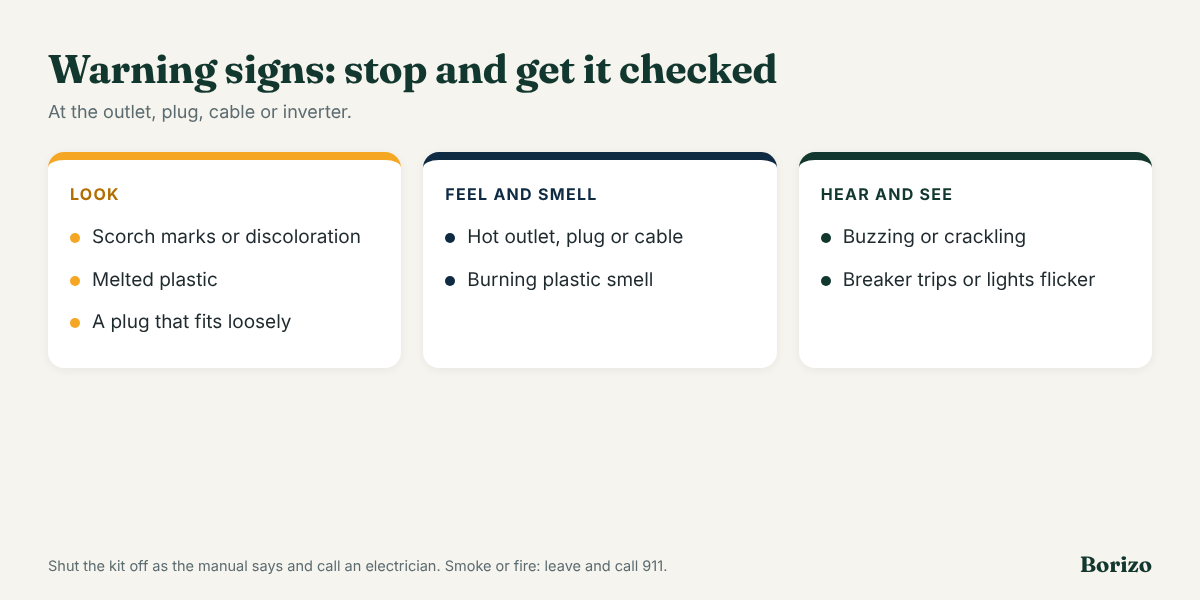
Stop and get help if you notice any of these at the outlet, plug, cable or inverter:
- The outlet, plug or cable feels hot to the touch.
- Scorch marks, melted plastic or discoloration around the outlet.
- A burning or hot-plastic smell.
- Buzzing, crackling or sparking.
- A plug that falls out or fits loosely.
- Breakers tripping or lights flickering on that circuit after you plug in.
Shut the kit off the way the manual describes, which usually means unplugging from the outlet or using its disconnect, and keep away from the plug blades, which UL warns can be energized while the panels are in sunlight. Do not use the outlet again until a licensed electrician has checked it. If there is smoke or fire, leave and call 911.
Habits that cut the risk
- Buy certified, and confirm the listing in the lab’s own database.
- Stay under your state’s cap, with one kit per outlet and per circuit.
- Know your circuit: find the breaker, note its rating and avoid circuits with heavy loads.
- Use the maker’s cable only, routed where it cannot be pinched, crushed or soaked.
- Inspect monthly: feel the plug after a sunny hour, look for discoloration and check the cable.
- Keep batteries cool and check any model against CPSC recalls.
- Have working smoke alarms, especially near the room with the outlet.
The full setup sequence is in our installation checklist.
Frequently asked questions
Can plug-in solar cause a fire?
It can, like any electrical device, but the risk is manageable. The main concern is overloading the wire between the kit and a big appliance on the same circuit, because the breaker cannot see the kit’s current. A certified kit, a light-load circuit and the maker’s cable reduce the risk.
Is a certified kit fire-proof?
No product is. Certification means a recognized lab tested the product against a safety standard such as UL 3700, which lowers the risk from the product itself. It cannot fix an overloaded circuit, a damaged outlet or a pinched cable.
Why does my outlet get warm with the solar kit plugged in?
Some warmth under load can be normal, but a hot outlet or plug is a warning sign of a loose connection or overload. Shut the kit off as the manual describes and have an electrician check the outlet before using it again.
Are balcony batteries a fire risk?
Lithium batteries can overheat if damaged or defective, and the CPSC has recalled power stations after fires. Buy a listed product, check recalls, keep it out of direct sun and away from heat, and follow the maker’s instructions.
Sources
- UL Solutions, “Question Corner,” IAEI Magazine, July 1, 2026 (combined current can exceed conductor ratings without tripping the breaker; GFCIs and one-way flow; energized plug blades; mitigations; UL 3700).
- CPSC, HALO 1000 portable power station recall, August 29, 2024, and warning on Aeiusny power stations, September 4, 2025.
- OSHA, Current list of NRTLs.
- State laws, read October 26, 2026: Vermont Act 149, Maine LD 1730, Colorado HB26-1007. All states: State Laws hub.
- Photos: stock images from Freepik, used for illustration only.

Borizo is an independent guide to plug-in and balcony solar in the US. We track state laws, check certification claims against official sources, and compare kits using published specifications. Laws change often, so every state page shows a “last updated” date and links to its sources. We earn a commission when you buy through our Amazon links, at no extra cost to you. Our content is for information only and is not legal or electrical advice.