
Are Bifacial Panels Worth It on a Balcony?
Bifacial panels collect light on both sides: the front faces the sun as usual, and the back picks up light reflected from the ground, walls and sky. Many balcony kits now advertise them, sometimes with eye-catching claims of extra output. On a big solar farm over bright ground, the gain is real and measured. On a balcony, where the back of the panel often faces a railing, a wall or a dark floor a few feet away, the picture is more mixed. This guide explains how bifacial panels work, what national lab research says about the gain, why the setting matters so much, how it interacts with your microinverter and state cap, and when paying extra makes sense. It is based on Sandia and NREL research. We have not tested any panel.
A bifacial panel on a balcony can make a little more energy than a standard panel, but usually less than the headline figures, because the back side needs open space and bright surfaces behind it to collect much light. It is worth it if the price difference is small, the panel sits away from the wall with light-colored surfaces around it, and your microinverter has headroom. If the back faces a dark wall up close, expect little gain.
- The gain depends on what is behind the panel. Sandia and NREL researchers call ground reflectance (albedo) a big factor; rear light rises from dark surfaces like asphalt to bright ones like white roofing.
- Measured gains are modest even in good conditions. NREL field tests on single-axis trackers showed annual bifacial gains of 6.5% for PERC and 9% for heterojunction modules.
- Shading on the back cuts the gain. In the same research, modules in interior rows got about half the rear light of front-row modules.
- Your state cap is in AC watts. Extra DC power from the back side does not raise your kit’s allowed output, and a small microinverter may clip it.
- Check weight and mount fit. Many bifacial panels use glass on both sides and need a mount that leaves the back open.
How bifacial panels work
A standard panel has solar cells behind a glass front and an opaque backsheet. A bifacial panel uses cells that respond to light on both faces and a transparent back, usually glass or a clear backsheet. Sunlight hits the front as usual. The back collects light that has bounced off the ground, nearby walls or the floor, plus some diffuse light from the sky.
Because the back side sees much less light than the front, the extra energy is a bonus on top of normal output, not a doubling. The size of that bonus depends almost entirely on how much light reaches the back.
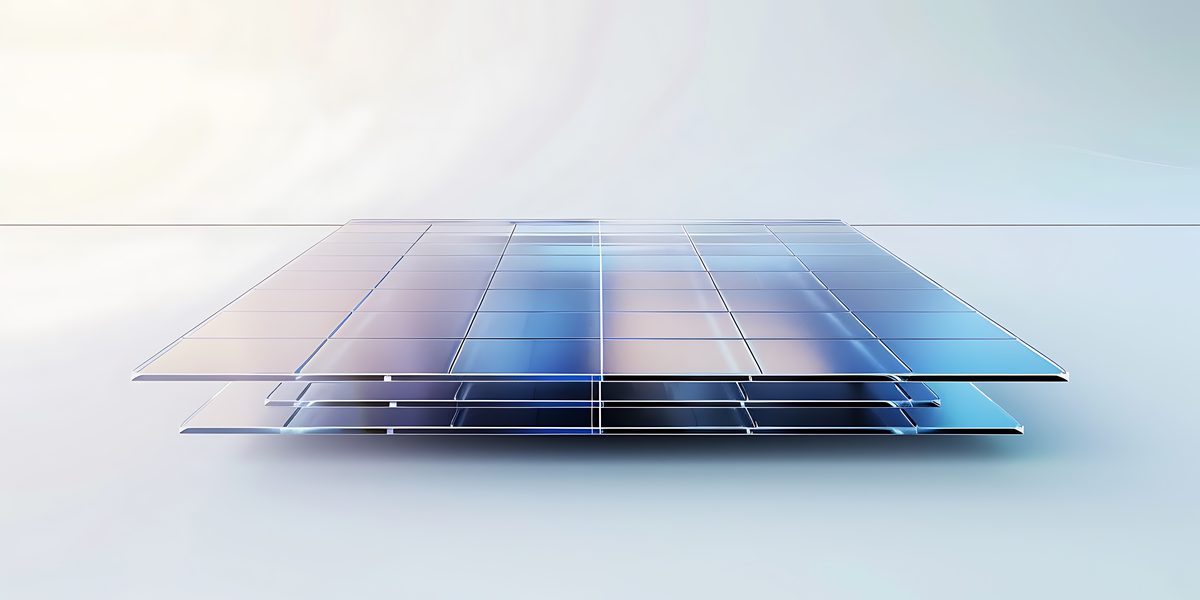
Stock illustration (Freepik), not a photo of a real product. We have not tested any product shown.
What the research says about the gain
Researchers from Sandia National Laboratories and NREL summarized years of bifacial work in a 2020 seminar. A few findings matter for balcony buyers:
- Albedo is a big lever. They describe surface albedo as a “big” factor. Rear-side light rises as the ground gets brighter, from dark surfaces such as asphalt to bright ones such as white roofing membrane. In their simulations, albedo changes alone shifted annual energy by roughly 4% to 8% for some configurations.
- Field gains on trackers were modest. On one-axis trackers at NREL, measured annual bifacial energy gains were 6.5% for PERC modules and 9% for silicon heterojunction modules. Trackers in open fields are close to ideal for bifacial panels.
- Self-shading hurts. Modules in interior rows received about half the rear irradiance of front-row modules, so anything blocking the back side matters.
- Models can be conservative. Rear-light estimates from common models appeared conservative by about 30% compared with measurements, so modeled gains may undershoot field results.
Put together: in good conditions, a bifacial panel adds a single-digit to low double-digit percentage. Claims of 20% to 30% extra should come with details of the setup they were measured in.
Why a balcony is a hard place for bifacial
| Balcony setup | Light reaching the back | Likely bifacial benefit |
|---|---|---|
| Panel flat against a solid railing or wall | Almost none | Little to none |
| Panel on an open bar railing, dark floor behind | Some, from the floor and surroundings | Small |
| Panel tilted out from the railing, light-colored floor and walls | More reflected light | Moderate |
| Ground stand in an open yard, over pale gravel or snow | Much more | Closest to research conditions |
The back of a balcony panel often faces the railing itself, the balcony floor, the building wall, or the person sitting there. A solid glass or metal railing panel right behind it blocks most rear light. An open railing over a pale floor lets more through. In a yard, a panel on a stand with space beneath it and light gravel, concrete or snow on the ground behaves much more like the research setups. See our ground-mount guide if you have that option.

The microinverter and your state cap
A plug-in kit’s output to your home is limited by its microinverter, and most state laws cap that AC output, often at 1,200 W. A bifacial panel does not change that cap. Extra power from the back side only helps if the microinverter has room for it.
When the panels’ DC power exceeds the inverter’s rating, the inverter limits its output, which is called clipping. Our guide to what a microinverter does explains how this works. If your kit already pairs large panels with a small inverter, bifacial gain may be clipped away on sunny summer middays, the very time the back side gets the most light. It can still help in the morning, the evening and on bright overcast days. Check the wattage limit guide for your state’s cap.
Other practical points
- Weight. Many bifacial panels are glass-glass, which tends to be heavier than a standard panel of the same size. Check the datasheet weight against your mount’s rating.
- Mount design. A mount with wide rails or a solid backing plate shades the back. Look for one that leaves the rear open.
- Ratings on the label. Bifacial datasheets often list front-side ratings plus extra output at different rear-gain assumptions. Compare panels on their front-side rating, and treat the bifacial figures as best-case.
- Durability. Glass on both sides can resist moisture well, but confirm the warranty terms the same way you would for any panel.
Is it worth paying more?
Do the arithmetic. Using our savings example of an 800 W kit making about 960 kWh a year, a realistic balcony bifacial gain of, say, 3% to 5% adds roughly 30 to 50 kWh a year. At typical residential prices that is worth a few dollars a year. So:
- If the bifacial version costs about the same, there is little downside, provided it fits your mount and weight limits.
- If it costs significantly more, it will take many years to pay back on a balcony, unless your setup is unusually open and bright behind the panel.
- A better use of extra money may be a better angle, less shade or a kit closer to your state’s cap.
The 3% to 5% figure is our illustration for a fairly open balcony, not a measured result. Your gain could be lower or higher; a plug-in energy monitor will tell you what you actually get.
Frequently asked questions
Are bifacial panels worth it on a balcony?
Sometimes. The back side only adds much energy when it has open space and bright surfaces behind it. On a balcony where the panel faces a solid railing or dark wall, the gain is small, so it is worth it mainly when the price difference is small.
How much more power do bifacial panels produce?
It depends on the setting. NREL field tests on single-axis trackers in open fields measured annual gains of 6.5% for PERC and 9% for heterojunction modules. Balcony setups usually get less because the back side receives less light.
Does a bifacial panel let me exceed my state’s wattage limit?
No. State caps usually apply to the kit’s AC output, which the microinverter limits. Extra power from the back side can be clipped if the inverter is already at its limit.
Sources
- Chris Deline (NREL), Silvana Ayala Peláez, Bill Marion, Bill Sekulic and Josh Stein, Understanding Bifacial Photovoltaic’s Potential, Sandia National Laboratories MCST seminar, April 16, 2020 (albedo; field gains 6.5% PERC and 9% Si-HJT on trackers; interior rows about half the rear irradiance; models conservative by about 30%).
- NREL, PVWatts Calculator.
- Our guides on microinverters and clipping and state wattage limits.
- Photos: stock images from Freepik, used for illustration only.

Borizo is an independent guide to plug-in and balcony solar in the US. We track state laws, check certification claims against official sources, and compare kits using published specifications. Laws change often, so every state page shows a “last updated” date and links to its sources. We earn a commission when you buy through our Amazon links, at no extra cost to you. Our content is for information only and is not legal or electrical advice.