Plug-in Solar for a Condo: Association Rules and How to Get Approval
Owning a condo feels like owning a home, but the balcony, the exterior walls and the railings usually are not entirely yours. They are often “common elements” or “limited common elements” controlled by the association, which is why a plug-in solar kit on a condo balcony can need board approval even though you own the unit. A few states have now changed what an association may say about plug-in solar; most have not. This guide explains who controls what in a condo, what the state laws we read say about associations, how to ask the board for approval, and the insurance and electrical points specific to condos. It is based on state law text. It is general information, not legal advice.
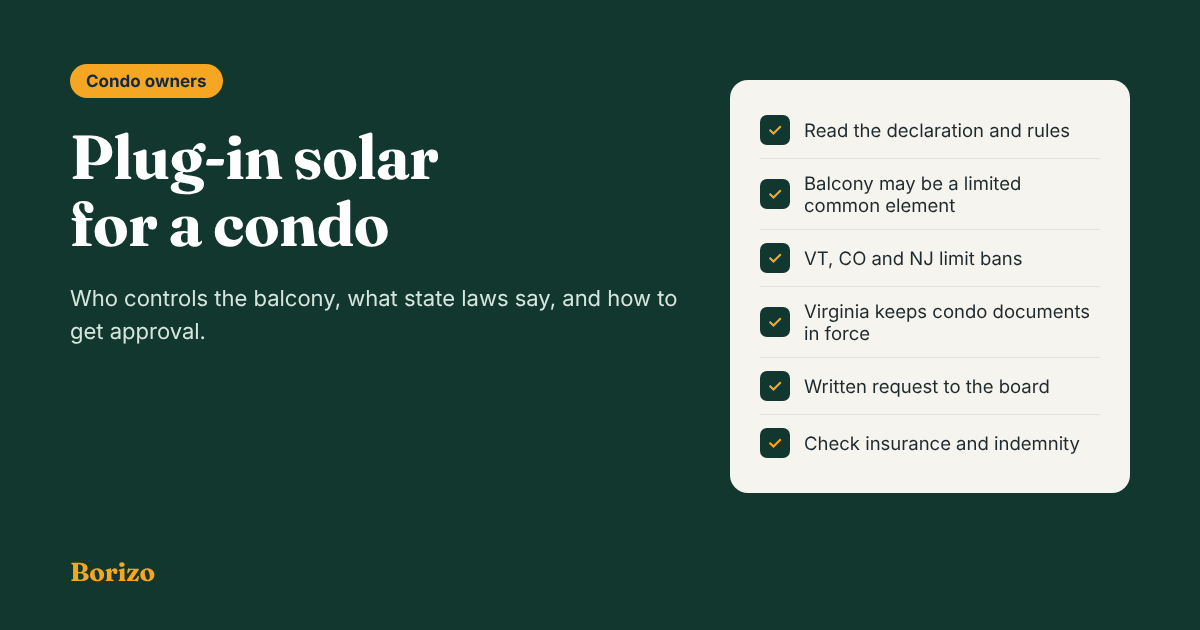
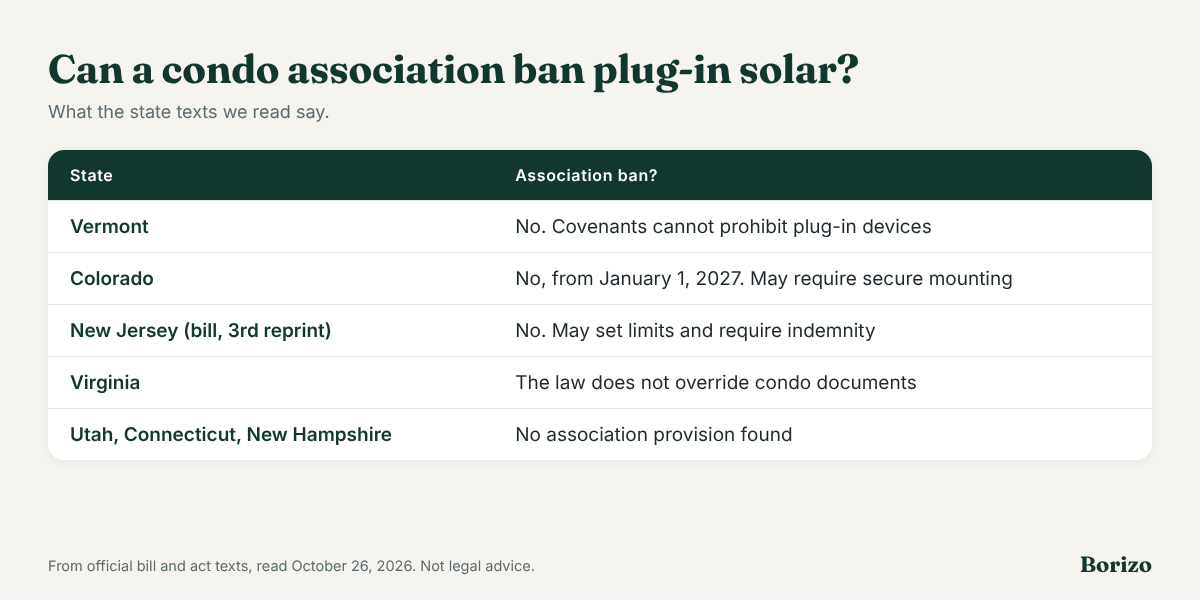
Read your condo declaration, bylaws and rules to see who controls the balcony and what changes need approval. In Vermont and Colorado (from 2027), and in New Jersey’s bill as we read it, an association cannot simply ban a plug-in device but may set reasonable limits. In Virginia, the plug-in law does not override condo documents. Elsewhere, your documents decide. Submit a written request with the product details, attachment method and insurance, and wait for approval before installing.
- Your balcony may be a limited common element, which you use exclusively but the association controls. Check the declaration.
- Vermont: covenants and similar agreements cannot prohibit plug-in devices, and the condo and co-op patio-railing exemption does not apply to them.
- New Jersey (third reprint): associations, condo boards and co-ops cannot enforce rules prohibiting a device on the exterior, but may set reasonable limits and require indemnification.
- Colorado: from January 1, 2027, an association may not prohibit the device but may require the owner to secure it reasonably.
- Virginia: the law does not override condominium instruments and association declarations.
Who controls a condo balcony?
Condo ownership usually splits the property into three parts:
| Part | Typical examples | Who decides about changes |
|---|---|---|
| Your unit | Interior walls, fixtures, outlets inside the unit | You, within the rules |
| Limited common elements | Balconies, patios, assigned parking, sometimes railings | Usually the association, though only you use it |
| Common elements | Exterior walls, roof, structure, hallways, grounds | The association |
If your balcony is a limited common element, the association’s rules about what you may attach or place on it apply. If the railing or the wall behind it is a common element, mounting anything to it is a change to the association’s property. That is why condo owners often need approval even for something that clamps on and comes off without tools.
What state laws say about associations
Most plug-in solar laws deal with electricity: a wattage cap, certification and what the utility may require. A few also address associations. Here is what the texts we read say:
- Vermont (Act 149): deeds, covenants and similar agreements cannot prohibit plug-in devices, and the existing exemption for condo and co-op patios and railings does not apply to plug-in devices. Devices must be “temporarily but securely attached.”
- New Jersey (S2368, third reprint): associations, condo boards and co-ops cannot enforce rules that prohibit an owner or tenant from using a device on the exterior of the premises, but may set reasonable size and placement limits and may require indemnification. Confirm the final enacted text before relying on it.
- Colorado (HB26-1007 summary): covenants that unreasonably prohibit or restrict these devices are unenforceable, and from January 1, 2027, an association in a common interest community may not prohibit the device. The owner may have to secure it reasonably and bears liability and costs.
- Virginia (HB 395): the law does not override private agreements such as recorded covenants, condominium instruments and association declarations. Your condo documents still decide.
- Utah, Connecticut, New Hampshire: we found no association provision in their plug-in laws.
Some states also have older “solar access” laws aimed at rooftop systems. California’s Civil Code section 714.1, for example, lets associations adopt reasonable rules about solar in common areas but bars a general ban on rooftop solar on an owner’s residence. Whether laws like that cover a balcony plug-in kit is not clear from their text, so do not assume they do. Our renters and HOA guide has the full state table, and the State Laws hub tracks changes.
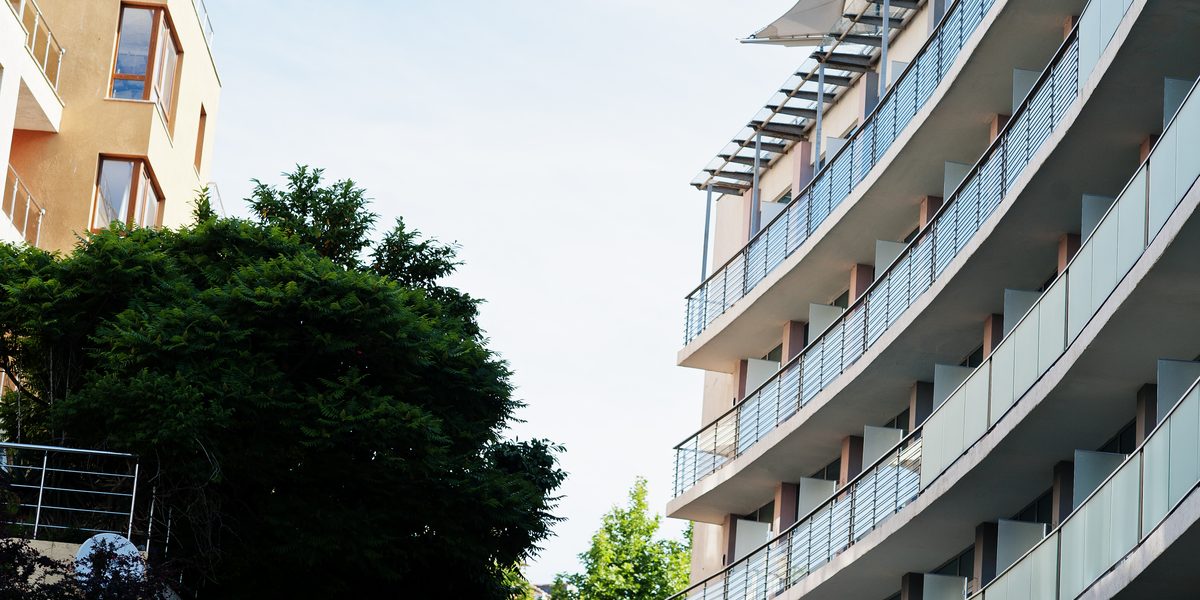
Stock photo (Freepik) for illustration only. It is not a Borizo installation, and we have not tested any product shown.
Reading your condo documents
Look in these places, and search for words like “balcony,” “limited common element,” “alteration,” “exterior,” “antenna,” “satellite,” “solar,” “appliance” and “electrical”:
- The declaration (sometimes called the master deed or CC&Rs) defines what is a unit, a limited common element and a common element.
- The bylaws describe how the board makes decisions.
- Rules and regulations often cover balcony use, what may hang on railings and what is visible from outside.
- Architectural or alteration guidelines describe the approval process for changes.
- Insurance requirements may require owners to carry certain coverage or to indemnify the association.
If the documents are silent on solar, the alteration and exterior rules usually apply.
How to ask the board for approval
Treat it like any alteration request, even where state law limits what the board can refuse. A clear, complete request is more likely to be approved quickly. Include:
- The product: model, number and size of panels, output in watts AC and the certification, with the lab listing. Our certification guide shows how to verify it.
- Where and how: a photo or sketch of the balcony with the panel’s position, the mount type, and a statement that nothing is drilled into common elements or wired into the building.
- Safety: the mount’s wind rating and your plan for storms. See no-drill mounting for options.
- Appearance: panel and frame color, and how visible it is from outside. Boards often care most about this.
- Insurance and indemnity: confirmation of your coverage and willingness to indemnify the association if required.
- Removal: a commitment to remove it and repair any marks if you sell or the board later requires it for building work.
Ask for a written decision, and keep it with your unit records. If you sell, the buyer may want to see it.
Electrical points for condos
- Use an outlet inside your unit or on your balcony that is fed from your own panel and meter, not a common-area outlet.
- Know your circuit. Find the breaker in your unit’s panel and avoid circuits with heavy loads. Our outlet guide covers this.
- No wiring changes without approval. Adding an outdoor outlet may touch common elements such as the exterior wall, so it usually needs board approval and a licensed electrician.
- Check utility rules. If your state requires utility notice, the unit owner on the meter account usually gives it. See wattage limits.
Insurance in a condo
The association’s master policy usually covers the building and common elements, while your unit policy covers your unit, belongings and personal liability. The exact split depends on your documents. Ask your insurer how a plug-in kit on a limited common element is treated, and whether your liability coverage applies if it falls and causes damage. Colorado’s summary puts liability and costs on the owner, and New Jersey’s bill allows associations to require indemnification, which makes the question more pressing.
If the board says no
First, ask why. A refusal based on placement, appearance or attachment may be fixable with a different location, a freestanding stand or a smaller panel. If you live in a state whose law limits what associations may prohibit, point to the provision politely in writing. If you believe the decision breaks your documents or the law, a local attorney or your state’s community association ombudsman, where one exists, can advise.
Frequently asked questions
Can my condo association ban plug-in solar?
It depends on your state. In Vermont, Colorado (from 2027) and, in the bill text we read, New Jersey, associations cannot simply prohibit plug-in devices but may set reasonable limits. In Virginia, the plug-in law does not override condo documents. Elsewhere, your declaration and rules decide.
Do I need board approval to put a solar panel on my condo balcony?
Often, yes, because balconies and railings are usually limited common elements or common elements controlled by the association. Check your declaration and alteration rules, and submit a written request even where state law limits a ban.
Who is liable if a condo balcony panel falls?
Usually the owner who installed it, which is why insurance matters. Colorado’s summary places liability and costs on the owner, and New Jersey’s bill lets associations require indemnification. Ask your insurer whether your liability coverage applies.
Can I add an outdoor outlet to my condo balcony?
Usually only with board approval, because it may involve the exterior wall, which is a common element. A licensed electrician should do the work, and a permit may be required.
Sources
- State laws, read October 26, 2026: Vermont Act 149, New Jersey S2368 (third reprint), Colorado HB26-1007 (summary), Virginia HB 395, Utah HB 340, Connecticut PA 26-127, New Hampshire SB 540.
- California Legislative Information, Civil Code § 714.1 (association rules on solar in common areas; no general ban on rooftop solar).
- Photos: stock images from Freepik, used for illustration only.

Borizo is an independent guide to plug-in and balcony solar in the US. We track state laws, check certification claims against official sources, and compare kits using published specifications. Laws change often, so every state page shows a “last updated” date and links to its sources. We earn a commission when you buy through our Amazon links, at no extra cost to you. Our content is for information only and is not legal or electrical advice.